Kitty has just come back from a 4 day tour of the Midwest. This was a private charter, set up for some clients who had a limited time in WA; we drew up an itinerary that covered some great attractions.
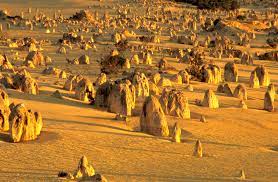
Day 1 saw us travel up the scenic Indian Ocean Drive to Nambung National Park, also known as the Pinnacles. This unique area is filles with amazing natural limestone structures, formed approximately 25,000 to 30,000 years ago after the sea receded and left deposits of sea shells. Over time, coastal winds removed the surrounding sand, leaving the pillars exposed to the elements. The Pinnacles range in height and dimension – some stand as high as 3.5m! There’s a great Visitor Centre and we also took the chance to walk through the desert surrounds and immerse ourselves in the landscape of weird and wonderful shapes.
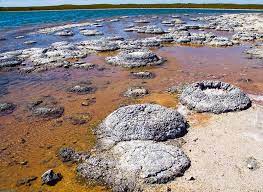
From Nambung we travelled onto Lake Thetis, one of the five sites in the world where you can see active stromatolites. To the uninformed, these look like mere lumps of rock but they were once the dominate life form on earth.
Stromatolites are formed through the activity of primitive unicellular organisms: cyanobacteria (blue-green algae) and other algae. These grow through sediment and sand, binding the sedimentary particles together, resulting in successive layers which, over a long period of time, harden to form rock. For at least three-quarters of the earth’s history stromatolites were the main reef building organisms, constructing large masses of calcium carbonate.
However their most important role in the history of the earth has been that of contributing oxygen to the earth’s atmosphere. When stromatolites first appeared on earth about 3.5 billion years ago there was little or no oxygen in the atmosphere. The organisms which construct stromatolites are photosynthetic. They take carbon dioxide and water to produce carbohydrates, and in doing this they liberate oxygen into the atmosphere. They changed the oxygen percentage of the earth from 1 % to around 20%, enabling plant life to form and ultimately paving the way for animal life, including ourselves.
If you look closely at these lumps of seeming rock, you can see them ‘fizzing’ as they release tiny oxygen bubbles into the hyper-saline waters of the lake.